




Latest NRAO News
News is managed by NRAO News & Public Information. Questions about News? Have a story to share? Want to interview a scientist or create new media about our telescopes?

Scientists have discovered the closest black hole yet, a mere 1,600 light years from Earth.

Astronomers have gained their first glimpse of the mysterious region near a black hole at the heart of a distant galaxy, where a powerful stream of subatomic particles spewing outward at nearly the speed of light is formed into a beam, or jet, that then goes nearly straight for thousands of light-years.

Two hundred astronomers from around the world will meet in Washington, DC on October 7 and 8 to discuss exciting new science to be done with the Atacama Large Millimeter Array (ALMA).
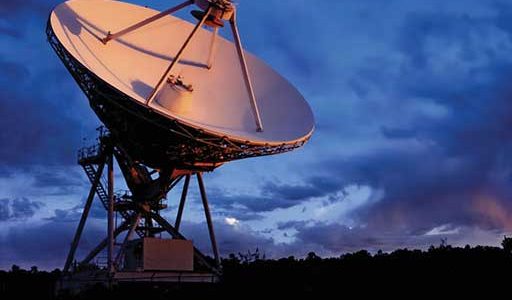
A team of radio astronomers has used the National Science Foundation’s Very Long Baseline Array (VLBA) to make the most accurate measurement ever made of the distance to a faraway galaxy.
Astronomers using the National Science Foundation’s powerful Very Long Baseline Array radio telescope have made a new and more accurate determination of just how long it takes us to circle our Galaxy — 226 million years.

Three teams of scientists have used the National Science Foundation’s Very Long Baseline Array radio telescope to learn tantalizing new details about how Sun-like stars are formed.