




By analyzing nearly a decade of NSF VLBA observations of the quasar TXS 2005+403, an international team led by the Center for Astrophysics | Harvard & Smithsonian (CfA) directly measured the tiny, turbulence-driven “ripples” imprinted on the quasar’s radio signal as it passes through a particularly chaotic region of the Milky Way.
Select :
aasactive galactic nucleusALMAanniversaryARDCasteroidasteroidsastrophotographyastrophotography workshopAtacamaAtacama Large Millimeter/submillmeter arrayAUIaui programAUI Scholarshipawardsbaselinebinarybinary starsbirthblack holeblack holesblazarBroader Impactsbrown dwarfCaltechcasaCDLcensusCentral Development LaboratoryCepheus acfachandracoma berenicesComa clustercometscosmiccosmic explosioncosmicaicosmologycryoCSOdark matterdead galaxyDecadal Surveydeep fielddeep field imagingdftaudigital backenddistant galaxydiversitydustearly universeEHTEMSequityeventEventsexoplanetexoplanetsfast radio burstFast Radio Burstsfirst fringesflarefotaufrbfringesfundinggalaxiesgalaxies mergergalaxygalaxy clustergalexgamma ray burstgamma ray burstsgbogbtgravitational lensgravitational wavesgrbgrbsgreen bank observatorygreen bank telescopeH20HAM Radiohelical magnetic fieldhonorsHubbleHugheshvachw2hydrogenhydrogen bubbleimage contestinclusioninternational women's dayIoiryaJansky FellowshipsJansky Lecturejetjet collimationjetsJupiterlearning centerLeroyLGBTlocal oscillatorlow noise amplifierm83M87magnetarMagnetarsmagnetic fieldsmaserMilky Waymodulusmolecular cloudsmoumtexNACnasaNational Astronomy ConsortiumNational Science Foundationnear earth objectsnebulaNEOsneutron starsneutron-star mergernglcngVLANINENMnoirlabnraoNRQZNSFNSF NRAOODIopen houseOrionOrion nebulaparkes radio observatorypawseypeoplePHANGSphotographyplanetary defensePlanetary Radarplanetary scienceplasmaPostdoctoral researchPRIDEprotoplanetary diskprotoplanetsprotostarprotostarsprotostellar jetPROVOCAproxima centauripulsarqorvoquasarradarradio telescoperam pressure strippingraytheonreceiverreceiver upgraderelativistic jetREUrixindustriesSchinnererscholarshipscience casesSETIsgrAsky surveySMBHsofiasoftwareSolar Systemspectrumspiral galaxiesstar deathstar factorystar formationstarbirthstarsstellar flarestellar nurseriesSTEMstem edsummer researchsupermassive black holesupernovasupernova remnantsupernovaesurveytdetidal disruption eventstradestradesmenunamunmupgradeusnovery large arrayvery long baseline arrayviaVLAvla open housevlassVLBAvlbivndawaterwiseworkshopxkaxray

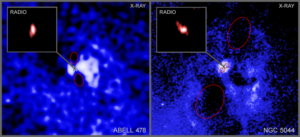
Spotted: ‘Death Star’ Black Holes in Action
Huge black holes are firing powerful beams of particles into space — and then changing their aim to fire at new targets.