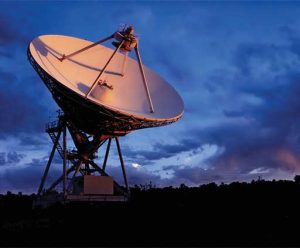
Scientists from around the globe are gathered in Socorro, New Mexico, to mark the tenth anniversary of the National Science Foundation’s Very Long Baseline Array (VLBA) , a continent-wide radio telescope that produces the most detailed images of any instrument available to the world’s astronomers.
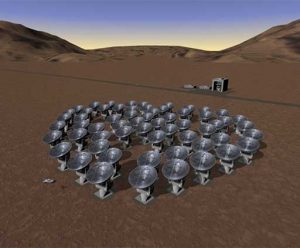
U.S. and European ALMA Partners Sign Agreement
Dr Rita Colwell, director of the U.S. National Science Foundation, and Dr Catherine Cesarsky, director general of the European Southern Observatory, today signed a historic agreement jointly to construct and operate ALMA, the Atacama Large Millimeter Array, the world’s largest and most powerful radio telescope operating at millimeter and sub-millimeter wavelengths.
Binary Stars ‘Flare’ With Predictable Cycles
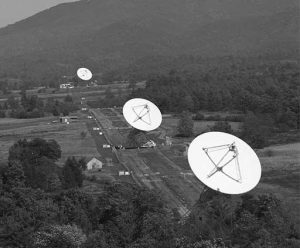
Astronomers have completed a 5-year campaign to monitor continuously radio flares from two groups of binary star systems. This survey is of special interest because it provides evidence that certain binary star systems have predictable activity cycles like our Sun.
National Science Board Approves VLA Expansion
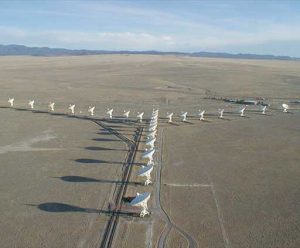
The National Science Board, the governing body for the National Science Foundation (NSF), has approved an expansion project for the Very Large Array (VLA) radio telescope in New Mexico.

New Head of New Mexico Operations Announced
The National Radio Astronomy Observatory (NRAO) has named Jim Ulvestad the new Assistant Director for New Mexico Operations in Socorro, New Mexico, effective December 15.
Decision Announced in GBT Arbritration Case
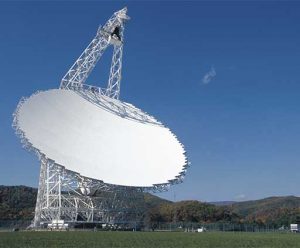
A decision has been reached by the arbitrator in the dispute between COMSAT Corporation, now part of Lockheed-Martin Global Telecommunications, and Associated Universities, Inc regarding additional costs on the contract to design and construct the Green Bank Telescope.