

Astronomers using data from the VLA Sky Survey have discovered one of the youngest known neutron stars — possibly as young as only 14 years. The dense remnant of a supernova explosion was revealed when bright radio emission powered by the pulsar’s powerful magnetic field emerged from behind a thick shell of debris from the explosion.
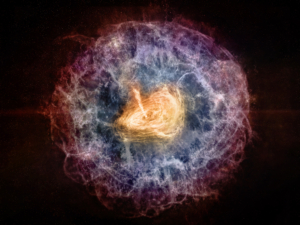
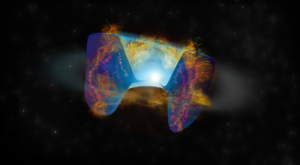
Stellar Collision Triggers Supernova Explosion
The Very Large Array Sky Survey gave astronomers the first clue that ultimately revealed a dramatic story — the remnant of a star that exploded long ago had plunged into the core of its companion star causing it, too, to explode as a supernova.
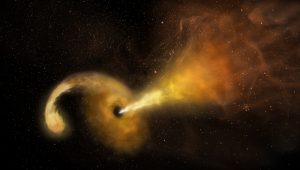
VLA Helps Astronomers Make New Discoveries About Star-Shredding Events
New studies using the VLA and other telescopes have added to our knowledge of what happens when a black hole shreds a star, but also have raised new questions that astronomers must tackle.
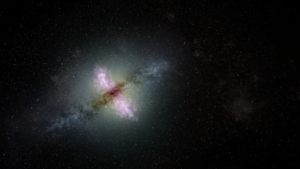
VLA Sky Survey Reveals Newborn Jets in Distant Galaxies
Comparing data from VLA sky surveys made some two decades apart revealed that the black hole-powered “engines” at the cores of some distant galaxies have launched new, superfast jets of material during the interval between the surveys.

Canadian Data Center Will Augment VLASS Science
Astronomers from a Canadian consortium will develop a data center to perform advanced processing of VLA Sky Survey data to augment its scientific value.
VLA Begins Huge Project of Cosmic Discovery
A new, all-sky survey uses the expanded capabilities of the VLA to produce a unique and valuable resource for astronomers of all specialties.